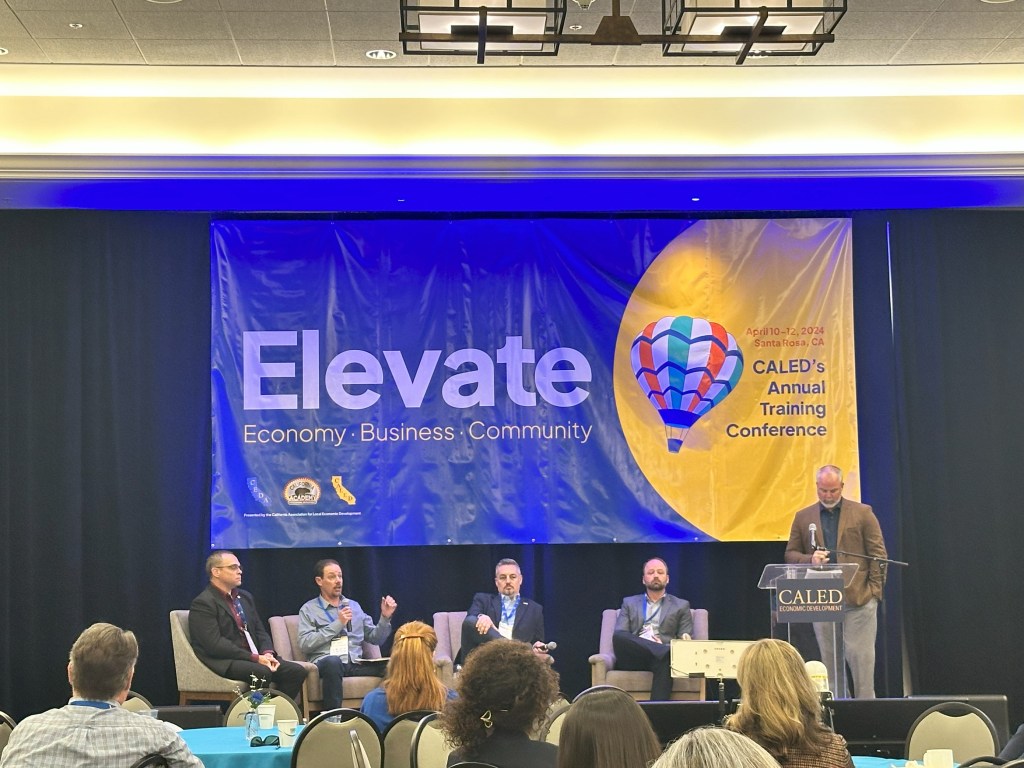
CALED Session on Leadership, Collaboration & Preparedness – Lessons Learned from the Sonoma Complex Fires
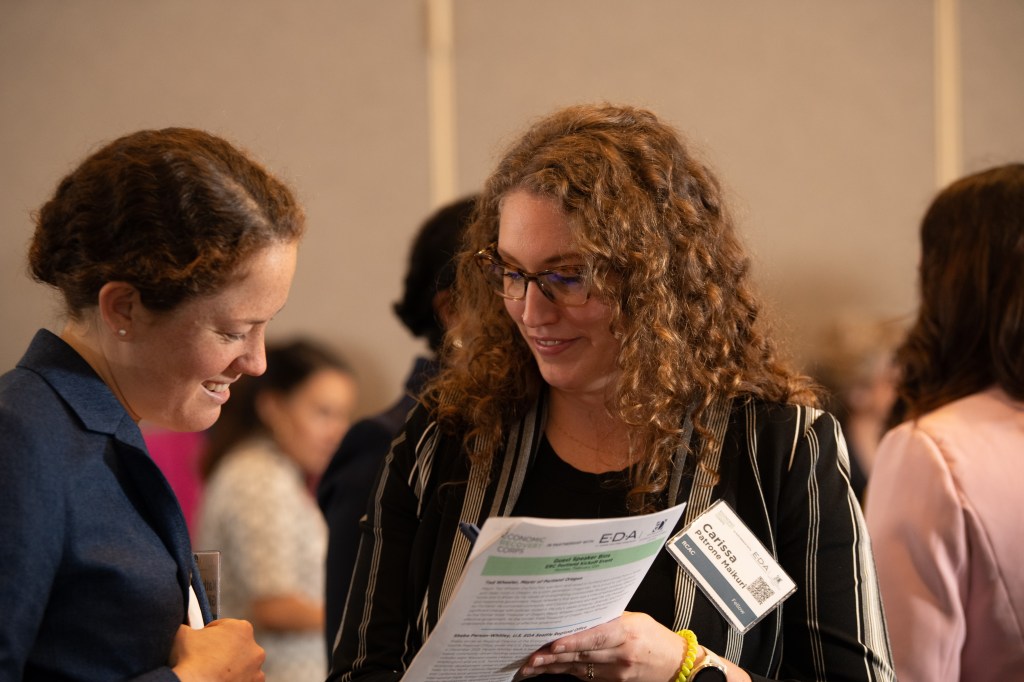
Carissa Patrone Maikuri had the opportunity to attend the California Association for Local Economic Development (CALED) earlier in April where she spent time learning about local economic development initiatives including everything from tourism, preparedness and recovery to rural workforce development and broadband. Local economies are ecosystems that must work together to set and support community priorities and spur collaborative action that champions resilience and centers the rich cultures and identities of a place.
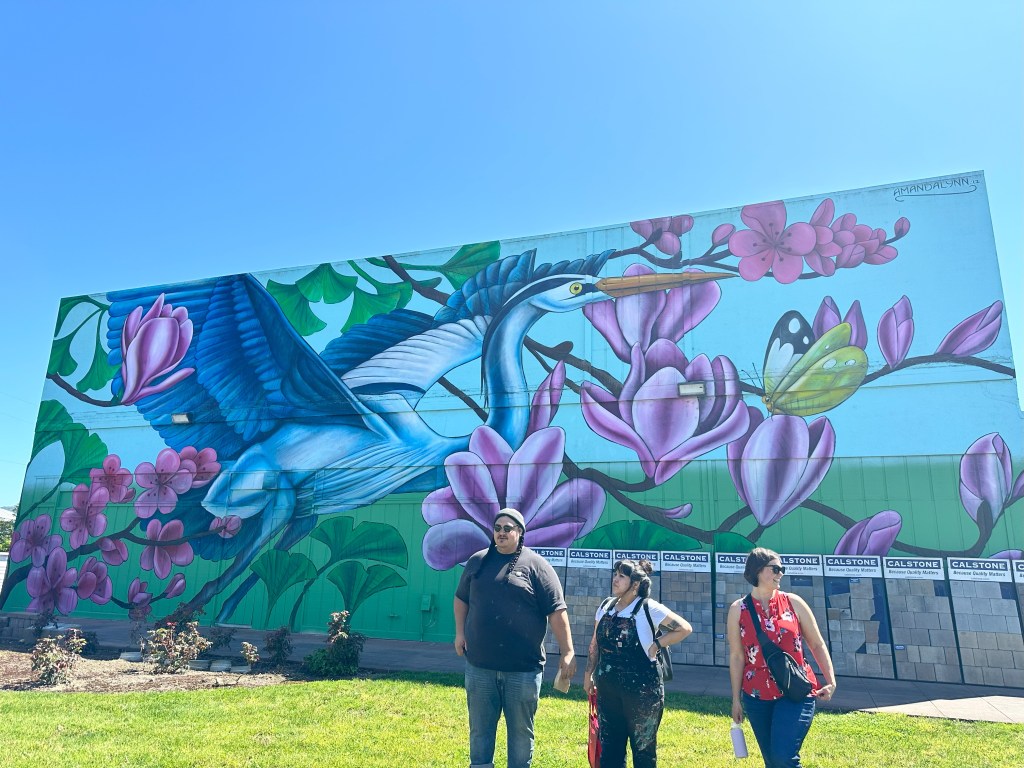
The Mural Project in Roseland, Santa Rosa
CALED attendees also had the opportunity to learn about local economic development projects in action on a walking tour of Roseland which is an economic opportunity zone in Santa Rosa. They stopped by several murals which elevated the importance of art in placemaking on their way to Tierra de Rosas, an affordable housing development and public plaza, and Mitote Food Park, a great incubator for food entrepreneurs and gathering space.
Economic Recovery Corps Fellows
“Man does not weave this web of life. He is merely a strand of it. Whatever he does to the web, he does to himself” – Chief Seattle, Chief of the Suquamish and Duwamish Tribes
Armstrong Redwoods State Natural Reserve
At the end of the week, Carissa made a quick trip north to the Armstrong Redwoods State Natural Reserve to find balance, reflect, move, and spend time among the giants.
Economic Recovery Corps Kick-off | Credit: PhotosbyKim
Officially starting February 1, Carissa Patrone Maikuri, Owner & Principal of CMPM Consulting LLC, joined the Economic Recovery Corps’ inaugural cohort of 65 fellows and host communities. Funded through a $30 million cooperative agreement with the U.S. Department of Commerce’s Economic Development Administration (EDA) under the CARES Act, the goal of the Economic Recovery Corps (ERC) is to build capacity in some of the most historically excluded and most impacted communities across the United States. This 30-month contract allows for fellows and host organizations to work together to do economic development differently- focusing on building economies that are resilient, equitable, and inclusive.
65 fellows, also known as “field catalysts” and host communities have been selected who span across 44 states, territories, and Tribal Nations. 62% of the host sites are rural, and 9 of the 65 projects are led by Tribes or involve a Tribal organization as a primary partner. Fellows and hosts are collaborating on a variety of economic development projects spanning from workforce development and entrepreneurial ecosystem building, to housing, climate resiliency, broadband, and more.
“By investing in capacity building and leadership development, facilitating knowledge sharing and partnerships, the ERC program will set the stage for the future of economic development and a new age of collaboration in the economic development field.”
Patrone Maikuri is working alongside Rural Community Assistance Corporation’s (RCAC) Building Rural Economies (BRE) team to provide capacity building and technical assistance, partnering with rural and Indigenous communities to incorporate inclusive community engagement and leverage local assets and resources to support innovation, spur business growth, and enhance community and regional self-sufficiency. In particular, Carissa and RCAC staff will be partnering with Plumas County to advance their growing recreation economy.
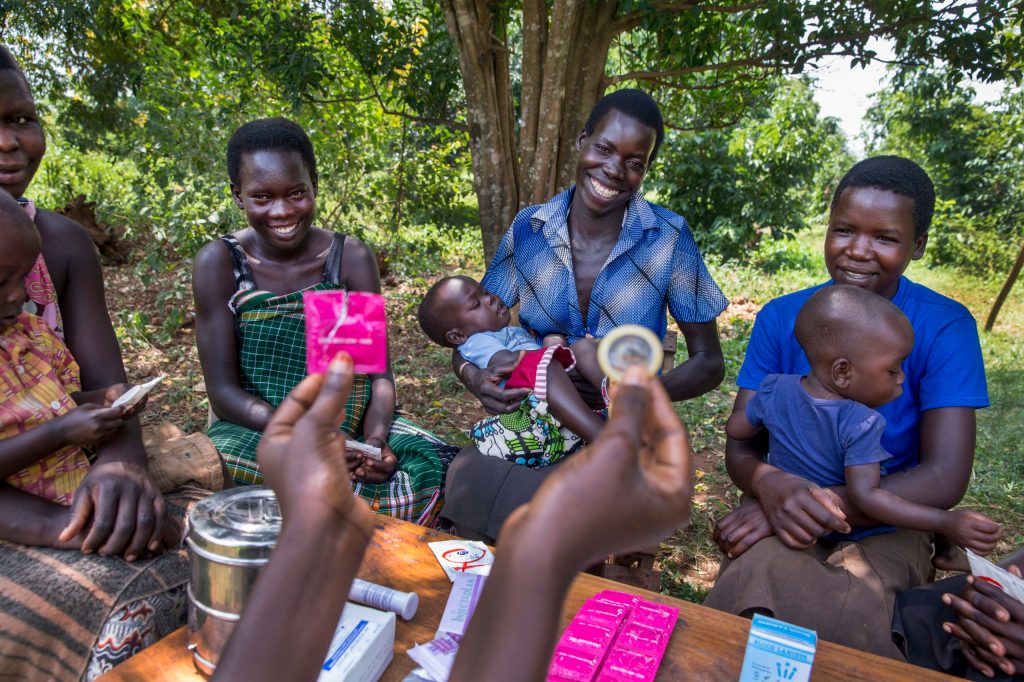
What does reproductive health have to do with climate vulnerability? In short- everything. Read the full Reasons to be Cheerful article here.
Women from the Young Mothers Group meeting and getting family planning information from a community health worker. The program is supported by Reproductive Health Uganda, with the goal to empower the women in the group, and provide them with family planning information. | Photo credit: Jonathan Torgovnik/Getty Images/Images of Empowerment
Carissa Patrone Maikuri had the privilege to sit down with Veronika Perková, a freelance environmental journalist and copywriter, to talk about the importance of intersectional action on advancing sexual and reproductive health and rights, climate adaptation, and resilience. Veronika also connected with Joan Kembabazi (Founder of Gufasha Girls Foundation), Carina Hirsch (Head of Advocacy and Policy with Margaret Pyke Trust), Khusbu Poudel (Program Coordinator with Ipas Nepal), and representatives from PATH Foundation Philippines.
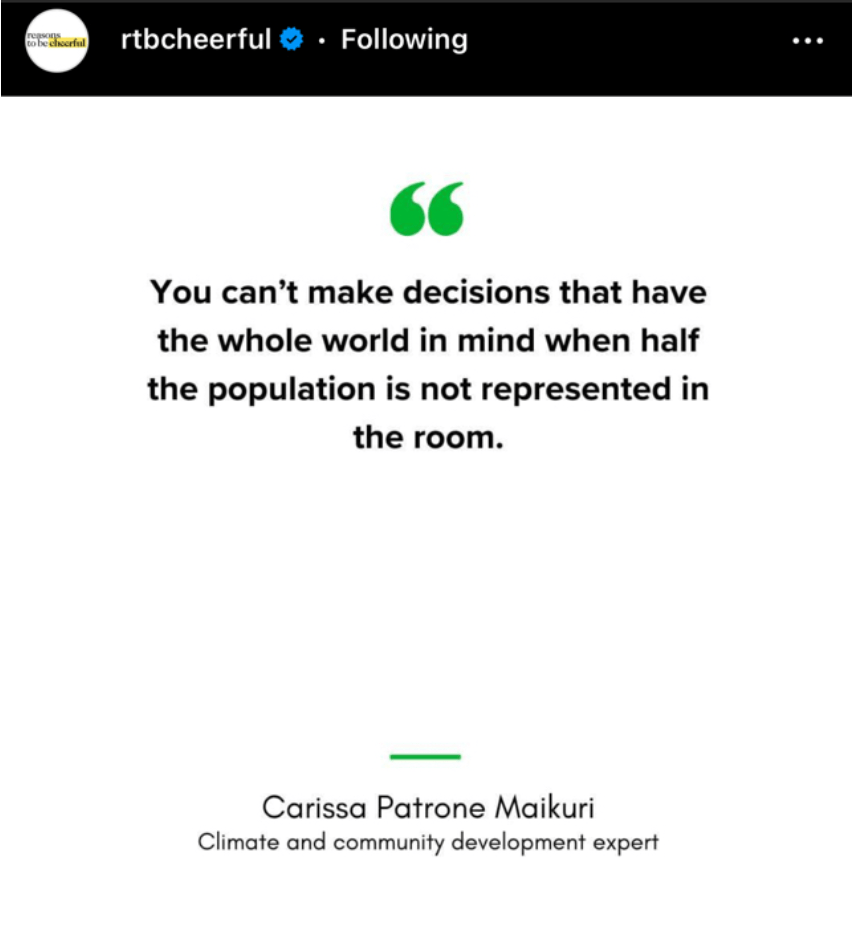
“When it comes to decision-making power, you can’t make decisions that have the whole world in mind when half of the population is not represented in the room” | Photo credit: Reasons to be Cheerful
In the article Joan Kembabazi speaks to the disproportionate impacts of climate change on young girls and women in Uganda who also often have limited access to modern contraception methods. PATH Foundation staff mention their integrated approach population, health and environment (PHE) which has focused on HIV prevention, food security, and marine conservation over the span of many years. Carina Hirsch adds that advocacy at the national level is key when it comes to climate, conservation, and gender equality. Lastly, Khusbu Poudel highlights the importance of centering women and children in this intersectional work.
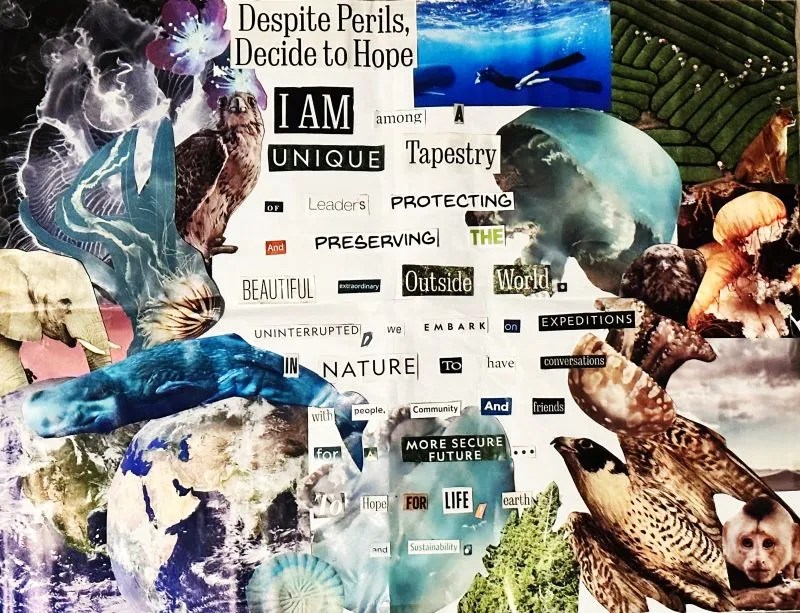
Carissa’s vision board circa 2019 | Photo clippings from National Geographic magazine
I am among a unique tapestry of leaders protecting and preserving the beautiful, extraordinary outside world. Uninterrupted, we embark on expeditions in nature to have conversations with people, community, and friends for a more secure future… To hope for life, earth, and sustainability.
Over the past week and a half, I have been reflecting a lot about drafting a new vision for my next career steps, but when looking back to my vision board from 2019, my overall goals remain unchanged. Working together, cultivating friendships, creating a life of adventure, and protecting people and the planet for generations to come are still core values that I look forward to continuously strengthening in both my professional and personal life moving forward. During this next career shift, I am excited to find opportunities to balance realistic hopefulness, creativity, adventure, and joy while working toward systems change.
For the past two years, I have been doing research, providing education, and convening experts and advocates around climate mitigation solutions that provide proven benefits for adaptation, boosting human well-being, and contributing to poverty alleviation, particularly in Africa and South Asia.
In order to multi-solve for various problems that communities face, we know that climate action must be both collaborative and intersectional.
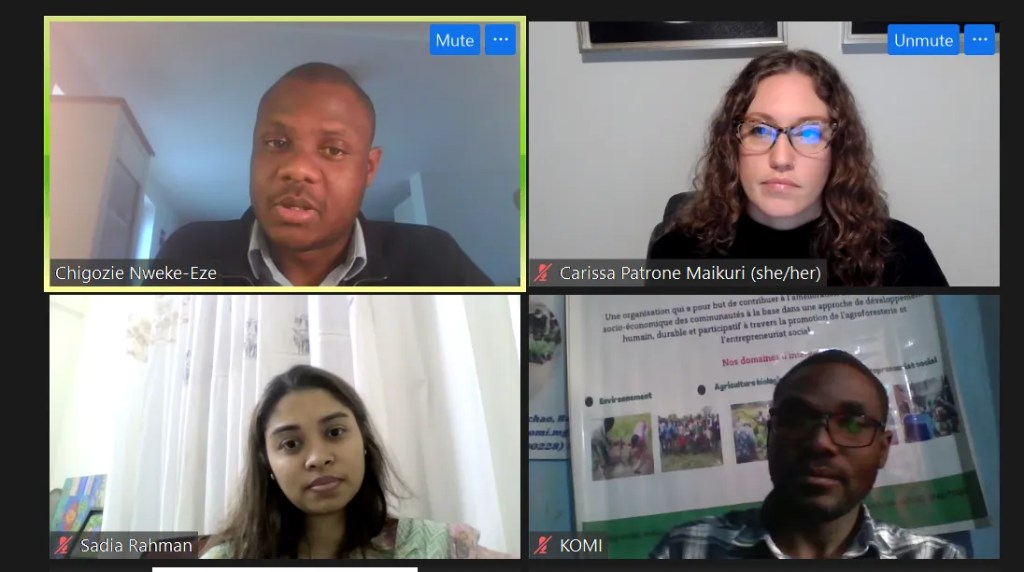
Panel of multidisciplinary experts including Chigozie Nweke-Eze, Sadia Rahman, and Komi Maglo that Carissa convened for the Global Gobeshona Conference on locally-led adaptation.
I have had the privilege of working alongside so many amazing colleagues, partners, and community members who advance justice not only in their work, but in their personal lives as well. From thought leaders, advocates, and teammates to activists and advisory council members, everyone has a unique role to play when it comes to climate action and justice.
Flooding in Lake Nakuru National Park, Kenya | Photo by Carissa Patrone Maikuri (2021)
Today, the Synthesis Report of the IPCC Sixth Assessment Report (AR6) was released which serves as a synthesis of knowledge on climate change and its impacts on people, communities, ecosystems, and biodiversity. Underscored throughout the report is the importance to recognize the interdependence of all things, and in particular the interlinkages between climate change adaptation, mitigation, health, and climate-resilient development.
While the findings of the AR6 are becoming more and more stark, unfortunately communities who have been on the frontlines of the climate crisis have been experiencing the severity of its impacts for years.
Currently, we have reached 1.1°C above pre-industrial levels. Much of this global heating has been caused by our (governments, businesses, and individuals in the Global North) historical emissions stemming from unsustainable levels of consumption, energy use, land use, ways of production, and transportation. Every degree of warming matters and we must do all that we can to mitigate future emissions (especially halting all new fossil fuel projects including the Willow project, named a “carbon bomb”, which was approved by President Biden just last week).
We know that those who are disproportionately impacted by climate change are also those who have contributed the least to the problem– particularly rural communities in the Global South. For example, the African continent has emitted less than 4% of all historical carbon emissions but often faces more severe and frequent extreme weather events.
Communities across the world are already facing and will continue to face widespread losses and damages due to climate change. With the warming of our oceans, storms such as the recent month-long cyclone Freddy that hit Malawi, Mozambique, and Madagascar become stronger. Over 220 people have died from this extreme weather event which “may have broken the record for longest-lasting tropical cyclone on record.”
Even though many countries have strengthened their Nationally Determined Contributions (NDCs) for 2030, countries are not on track to meet their climate goals and limit warming to well below 2°C (preferably 1.5°C). Funding is inadequate for further action on emissions reductions but also strengthening adaptation necessary to protect communities from adverse climate impacts. We need three to six times more than the amount that is currently invested in climate.
There still is hope to mitigate the greatest impacts that climate change can have on humanity and the planet. Climate solutions that are available today can provide various co-benefits for communities, livelihoods, and health, and help to reduce loss and damage. In other words, collaborative climate action can multi-solve for various issues that communities face today. We must act now as climate change affects us all. There are already blueprints available and governments, organizations, businesses, leaders, communities, and individuals all have a role to play in tackling climate change together.


 CMPM Consulting